
Quick diagnostic
A successful sign-in does not guarantee that the selected account package has loaded. Check group filters, parental controls, profile selection and whether the player has finished downloading its catalogue.
Understand the symptom
A successful sign-in does not guarantee that the selected account package has loaded. Check group filters, parental controls, profile selection and whether the player has finished downloading its catalogue.
Start by making the failure repeatable and preserving a working reference where possible. A useful escalation says exactly what failed, when it failed, which comparison changed the behaviour and which checks were already completed. This is more actionable than a screenshot of a generic loading spinner.
Use a reference session
Return to the unfiltered category view, refresh once and note whether live TV, movies and series are all missing or only one group.
Choose one source that normally works and one that demonstrates the problem. Use the same device, app and account for the first comparison. Record the starting state, the action performed and the observed result. Keep the comparison small enough to repeat after each change.
The first five checks
- Record the model and operating system. Find the device model in system information and write down the player version. Similar product names can hide different software platforms, particularly in television and streaming-stick families.
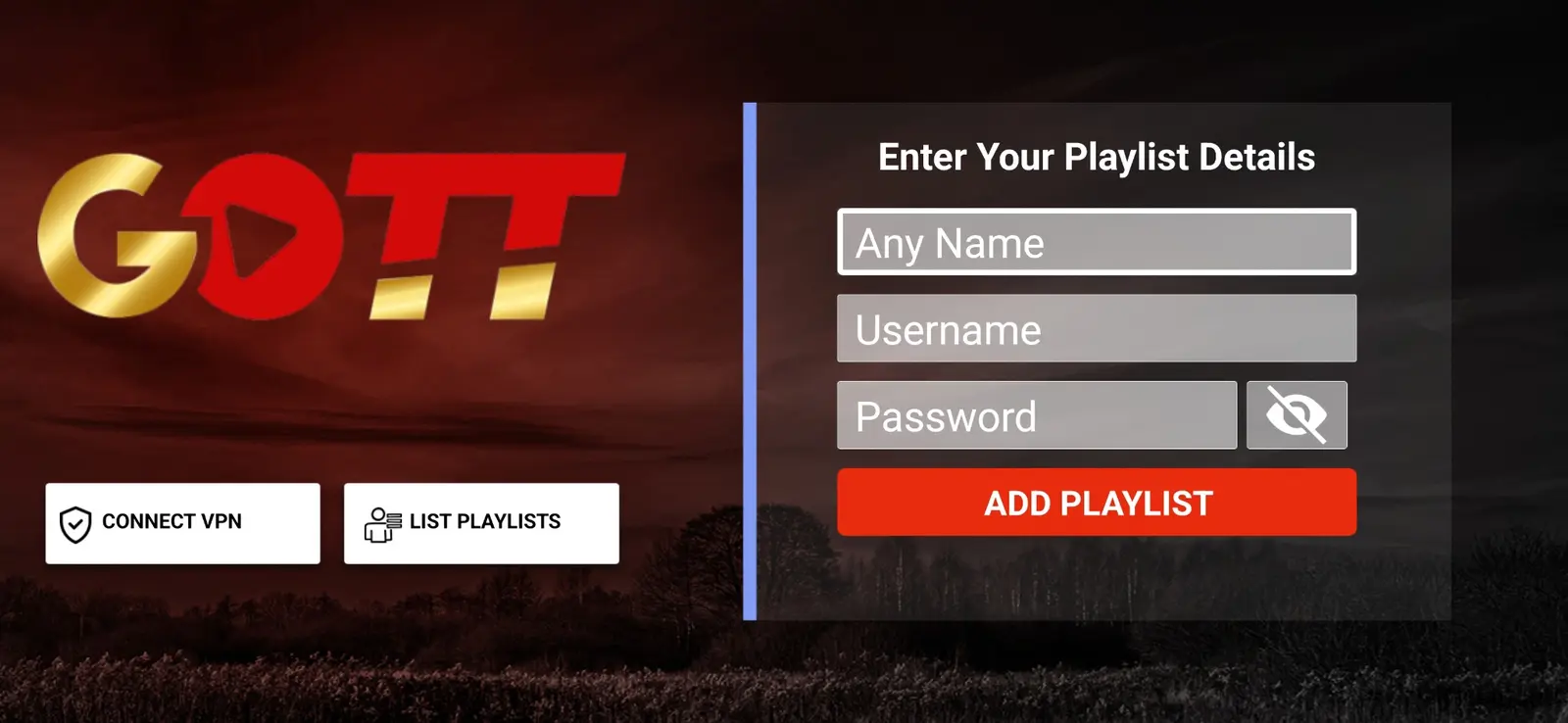
- Choose the correct login route. Compare the fields on screen with the details supplied by support. A username/password account belongs in those fields; an activation code belongs in the code form; a portal address belongs in the portal settings.
- Install from the verified source. Use the supported store or the download route confirmed for the selected device. If the app title, package or code differs from the guide, stop and ask which build support currently recommends.
- Save one named profile. Give the playlist an identifiable local name. Review punctuation, credential case and expiry before saving, and keep a private copy of the support instructions.
- Test a small reference set. Open one live channel, one movie if supplied and the programme guide. Check picture, sound, remote control and a short return to the channel list before evaluating advanced features.
Preparing a support escalation
Start by making the failure repeatable and preserving a working reference where possible. A useful escalation says exactly what failed, when it failed, which comparison changed the behaviour and which checks were already completed. This is more actionable than a screenshot of a generic loading spinner.
A test should either reproduce the failure, improve it or show no meaningful change. Record each result with the setting used. A change that helped once but cannot be repeated is weaker evidence than a comparison that behaves consistently. Return to the baseline when the new setting makes another feature worse.

Read the evidence before resetting
| Scope | Useful follow-up |
|---|---|
| One title or channel | Confirm that source, quality label, codec and time. |
| One device | Check the app build, decoder, output and local network. |
| One network | Compare connection path, signal and competing traffic. |
| All account categories | Confirm account state, selected profile and connection limit privately. |
| Only after a recent change | Record the old and new settings; restore a verified baseline where possible. |
What a successful fix looks like
The setup is ready for a trial when the same reference channel opens twice, audio is audible, the guide can be reopened and the account expiry is understood. If only one category fails, report that distinction rather than saying the entire account is broken.
Repeat the original action rather than stopping after the app launches. For a programme guide problem, reopen the guide and check timing. For playback, test video and audio for the period that previously failed. For a login problem, verify the catalogue and expiry after the account opens. A successful comparison needs to cover the actual symptom.
Common changes to avoid
Do not buy an unrelated app licence to fix an unconfirmed account error. Do not reset the device merely because a URL was mistyped. Preserve a working profile until the new one is verified.
Do not paste private playlists into public converters, disable security checks to install an unknown package or purchase a different service simply because one test failed. A download code, app licence and service activation code are different things. Ask support which route applies before replacing a working installation.
Send a support-ready report
Include the exact symptom “account opens but the playlist is empty”, device model, player version, account method, connection type, source or category name, time and timezone. Add the reference source that worked and describe each completed comparison. If the problem started after an update, include the build number and first observed date.
Redact passwords, private playlist URLs, device keys and customer details. Use the Golden OTT WhatsApp or email route shown on the contact page. A public screenshot should show the error or setting, not credentials. Ask support for a private identifier only if it is needed to locate the account.
Re-test the experience before choosing a term
Golden OTT offers a one-day trial through WhatsApp after the compatible player is installed. Use it on the intended device and network, and confirm the categories important to you. A successful trial on one phone does not establish that a different television supports the same app or codec.
The personal plans remain $8.99, $23.99, $38.99 and $49.99 for 1, 3, 6 and 12 months. A longer term changes duration, not the result of a device or network diagnostic. Confirm app fees and concurrent-connection needs separately.